Scientific amulet study: how 100–1,000× macro photos differ from a 10× loupe
ส่องพระแบบวิทยาศาสตร์ ภาพขยาย 100–1,000 เท่า ต่างจากกล้อง 10 เท่าอย่างไร · in Thai
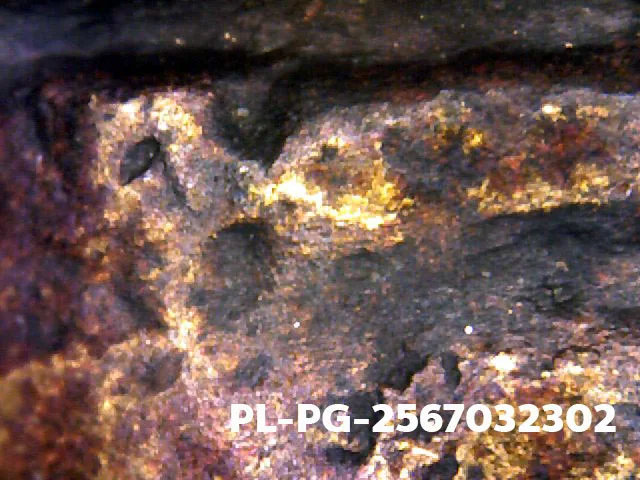
Amulet collectors have long relied on a 10× loupe. It is very useful, but it has one important limit: what you see stays in the eye of the person looking, and everyone else has to take their word for it. Amulet Ping therefore records the surface of each piece with 100× and 1,000× magnification and publishes every photo on that piece's page. This article explains why this way of recording is close to scientific principles, what macro photos can show, and what their limits are.
How is a 10× loupe different from 100–1,000× macro photos?
Both magnify detail, but they differ in recording and re-checking, which is the heart of using evidence systematically.
| 10× loupe | Recorded 100–1,000× macro photos | |
|---|---|---|
| Who can see it | Only the person looking | Everyone sees the same image at the same time |
| Record | None; relies on memory and description | Kept permanently, tied to the piece code |
| Re-checking | Needs the real piece again | Open and compare again any time |
| Level of detail | Overall mold, surface and deposits | Down to the material: metal grain, pores, ingredient grains |
Why call it scientific evidence recording?
A basic principle of science is the use of empirical evidence that others can re-check (reproducibility), rather than one person's opinion. Amulet Ping's macro recording follows the same three principles:
- Recorded from one real piece: every photo is tied to that piece's code; no photos from other sources.
- Fully disclosed: full-view photos of every side and all macro photos are on that piece's page.
- Re-checkable by anyone: readers see the same photos and can compare them with other pieces or references themselves.
Here, "scientific" refers to the method of recording and disclosing evidence. It does not mean macro photos can prove age or authenticity.
What do 100× and 1,000× photos show?
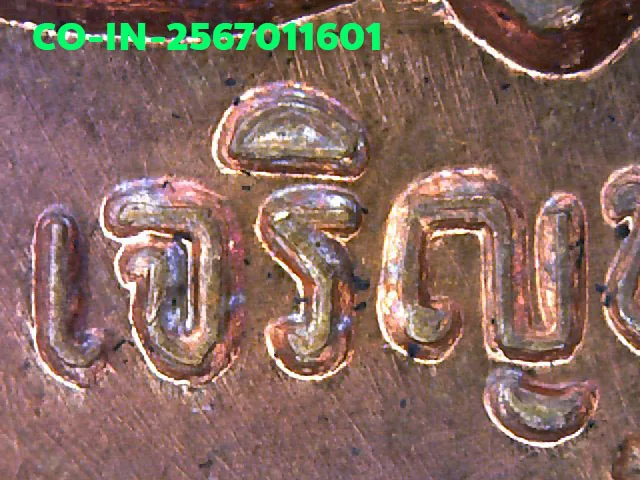
100× shows the overall surface of a small area, such as mold recesses, deposits in crevices, wear on high points and ingredients on the surface. It is good for following the continuity of the surface. 1,000× goes down to the material itself, such as metal grain, tiny pores, layers of deposits and powder grains, but the depth of field is shallow and the area small, so several photos should always be read together.
What you can observe in macro photos, by material
Each material comes from different ingredients and processes, so the points to observe differ.
Cast metal
- Metal surface and grain, and the evenness of the metal colour beneath the patina
- Small pores and gas bubbles from pouring molten metal, and finishing marks
- Natural oxide layers and patina — usually built up in deep recesses, while worn high points show bare metal
- Continuity of the patina across surface, recesses and edges (features consistent with metals of the period)
Stamped coin
- Sharpness of the design lines and lettering from the stamping die
- Edge-cutting marks and the flow of metal near the rim
- Surface layers such as gold plating, blackening or oxide, and wear on high points
- Deposits in deep recesses compared with flat areas (features consistent with the age of use of the metal)
Sacred powder / lime
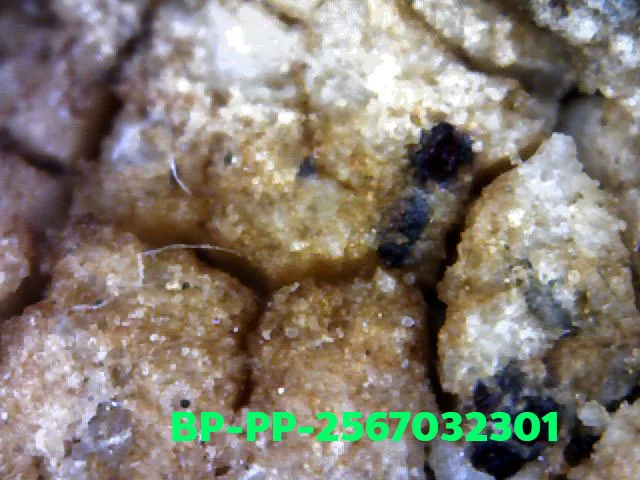
- Sacred ingredients and powder grains of various sizes mixed into the material
- Natural sinking, cracks and shrinkage of the powder body
- Surface deposits and deposits in the mould recesses
- Density of the material, comparing high points with recesses
Clay
- Sand and mineral grains within the clay
- Pores and the surface after firing
- Soil or surface deposits in the recesses
- Differences in clay colour between the outer skin and worn spots
Herbal (Wan)
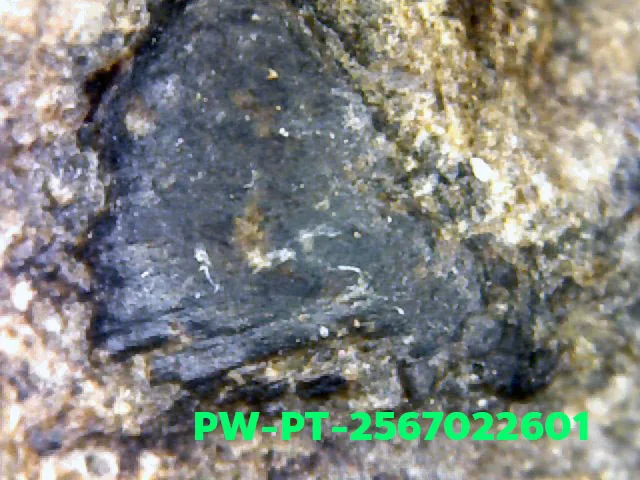
- Fibres and herbal fragments mixed into the material
- Mineral grains or powder blended into the body
- Natural cracks and shrinkage
- Surface deposits and deposits in the mould recesses
Metals by era: the nature of patina and ageing
Each metal reacts differently with air, moisture and its surroundings, forming the surface layers collectors call "patina" or "deposits", which build up slowly with time and storage conditions. Typical examples:
- Copper, brass, bronze and cast alloys tend to form dark-brown to reddish oxide, sometimes with green copper compounds.
- Silver tends to tarnish brown to black from sulphur compounds.
- Lead and chin (lead–tin) tend to show white to grey deposits.
- Plated surfaces such as gilding or blackening usually wear first on high points, revealing the metal underneath.
Manufacture also leaves different traces. Cast pieces are made by pouring molten metal into a mould, so pores, gas bubbles and finishing marks are common; stamped coins are pressed with dies, so lines are sharp and the edge shows cutting marks. Students look at continuity and naturalness, for example heavy deposits deep in recesses that hands cannot reach while high points are worn smooth. However, surface deposits can be accelerated with chemicals or heat, so macro photos can only tell whether what is seen is consistent with metal of the period; they cannot state a year of making.
Limits of macro photos and laboratory testing
Macro photos only show surface features; they do not reveal elemental composition. Deeper information needs laboratory instruments: XRF (X-ray fluorescence) analyses elements without damaging the piece but only measures a thin surface layer, so patina or plating can affect the result; SEM-EDS shows microstructure together with elements in fine detail but needs a specialised lab and limits sample size. Importantly, no instrument can directly give the "year of making" of a metal, because carbon dating works on organic materials, not metal. Every method is supporting information only.
How to view macro photos on Amulet Ping
- Open the page of the piece and scroll to "100× magnification" and "1000× magnification".
- Click a photo to open it large and study each area: recesses, edges and high points.
- Use the "Evidence-recording standard" box, which summarises the number of photos and what to observe for that material.
- Ask us on WhatsApp with the piece code if you want more angles.
Examples of macro photos from real pieces
The photos below are real macro photos from Amulet Ping pieces. Click a photo to enlarge it, or open each piece to see every side.
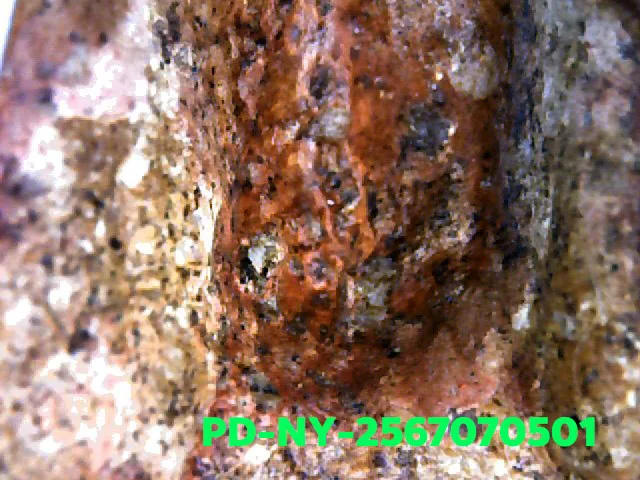
- Luang Phor Ngern statuette, Phim Niyom 4-Chai, Indra-eye, Mixed alloy, Wat Bang Khlan, Phichit, BE 2462
- Luang Pu Tim amulet, Charoen Phon Lang (text below), Copper, Wat Lahan Rai, Rayong, BE 2518
- Somdej Toh amulet, Prok Pho (bodhi canopy), Sacred powder (Phong), Wat Bang Khun Phrom, BE 2414
- Luang Phor Thuad amulet, Yai (large) Kak Ya Yak mineral, Herbal (Wan), Wat Chang Hai, Pattani, BE 2497
- Phra Wisutthikasat amulet, Yai (large) curved knee, Fired clay, Wat Nang Phaya, Phitsanulok, BE 2300
Can a 1,000× photo tell whether an amulet is genuine?
No. Macro photos are empirical data for studying and comparing surface features; they are not a certification of age or authenticity. Use several kinds of information together and consult an experienced expert you trust.
Should I still use a 10× loupe?
Yes. A 10× loupe is convenient, portable and ideal for examining a real piece in your hand. Recorded macro photos add what a loupe cannot: evidence that everyone can see and re-check.
Summary
Recording 100–1,000× macro photos turns "what one person saw" into "evidence everyone sees the same way", a basic principle of using data scientifically. Amulet Ping applies this standard to every piece it has recorded with macro photos. Please use your own judgement.
Quote the item code so we can answer quickly.
Macro photos are empirical data for study and comparison — not a certification of age or authenticity. For in-depth elemental analysis (e.g. XRF / SEM-EDS), please use an independent laboratory. Please use your own judgement.